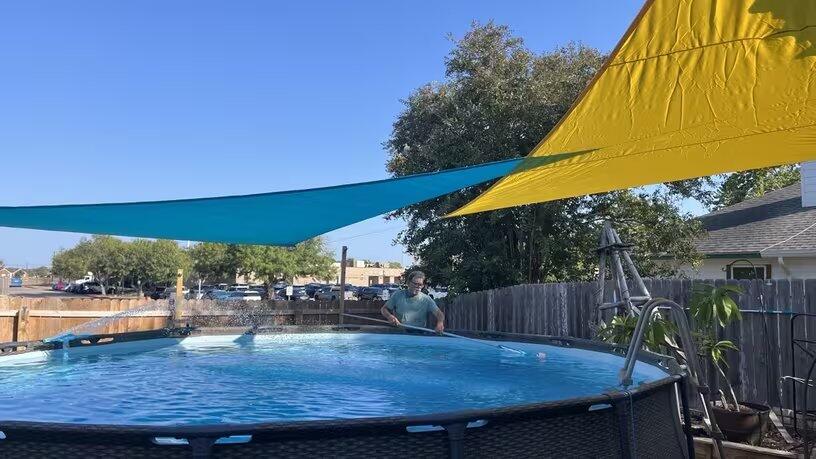
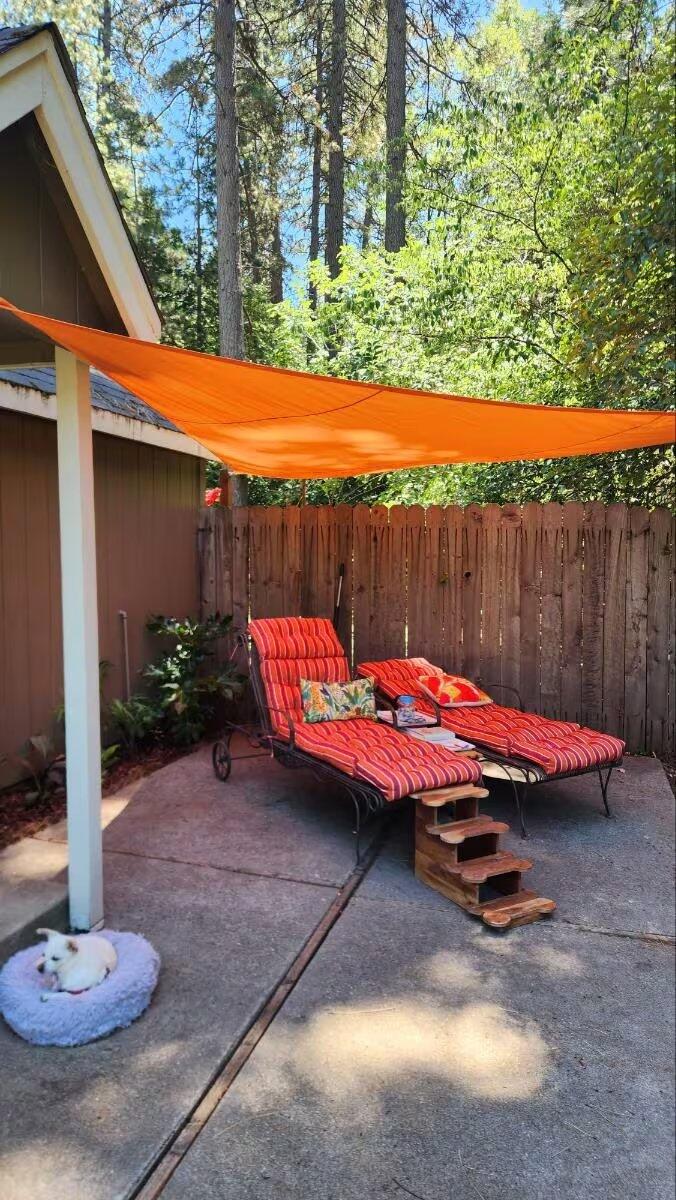
Quick answer: choose a shade sail if you want affordable, flexible shade over a patio, deck, pool or yard and you have (or can add) three or four solid anchor points. Choose an awning if you want shade that attaches only to the house wall, retracts on demand or keeps a doorway or window dry. Shade sails cover larger, odd-shaped areas for less money; awnings are tidier against the house but cost more and cover a fixed strip. (Full disclosure: ShadeMart sells shade sails, not awnings, so we've tried to keep this fair.)
Shade sail vs awning at a glance
| Shade sail | Awning | |
|---|---|---|
| How it mounts | 3 or 4 corners to posts, walls, fascia or trees, tensioned with hardware | Bolted to the house wall; may have support arms or legs |
| Coverage | Large areas and odd shapes; can be layered | A strip along the wall, limited by arm length |
| Cost | Usually lower; our standard sails start at $21.99 | Usually higher, especially retractable and motorized models |
| Rain | Standard HDPE sails are breathable; waterproof sails need a 20–40° slope | Often water-resistant fabric or solid panels |
| Wind | Breathable fabric lets wind through; take down for major storms | Retractable awnings must be rolled in when it's windy |
| Look | Modern, architectural; many colors | Traditional, tidy against the house |
| Installation | DIY-friendly if anchors are solid; posts may need concrete footings | Wall mounting into framing; often professional |
When a shade sail is the better pick
- Away from the house. Pools, playsets, gardens and driveways often have no wall to hang an awning from.
- Big or irregular spaces. Rectangles, squares and triangles can be combined to cover almost any shape.
- Budget. A standard shade sail plus a hardware kit usually costs far less than a comparable awning.
- Heat relief. Our standard sails use 200 GSM HDPE that blocks up to 95% of UV and cools the area underneath by about 10–15°F, while staying breathable so hot air doesn't get trapped.
When an awning is the better pick
- No anchor points. If you can't add posts or reach solid framing at three or four corners, an awning that mounts only to the wall is simpler.
- You want shade on demand. Retractable awnings roll back on cloudy days or in winter.
- Doorways and windows. A small fixed awning keeps rain off an entry or cuts window heat better than a sail.
- HOA rules. Some communities restrict sails or posts; check before you buy either.
Want awning-style shade from a sail?
Many people get an awning look by mounting one or two corners of a sail high on the house fascia and the other corners on posts out in the yard. This slopes the sail away from the house so rain runs off. Pick a size about 1–3 ft smaller than the distance between anchors to leave room for hardware; our shade sail size guide shows how, and how to angle a shade sail covers the slope.
- Along the back of the house: a rectangle sail usually fits best.
- In a corner where two walls meet: a right triangle sail.
- Need to stay dry: a waterproof shade sail mounted at a 20–40° slope.
- Over a pergola instead: see breathable vs. waterproof pergola covers.
If no standard size fits, custom sizes are made in 1–3 business days and ship within 3–7 business days from California. Custom-made items are final sale.
FAQ
Is a shade sail cheaper than an awning?
Usually, yes. A standard sail and hardware kit typically cost much less than a retractable awning of similar coverage, though posts and footings add cost if you need them.
Can a shade sail attach to the house like an awning?
Yes. Mount the house-side corners to solid framing such as fascia backed by rafters or a structural beam, never to siding or gutters alone.
Which is better in wind?
A properly tensioned breathable sail lets wind pass through. Retractable awnings should be rolled in when it's windy. Take sails down before major storms.
Which keeps rain off?
Standard HDPE sails are breathable and let rain through. A waterproof sail or an awning with water-resistant fabric keeps the area dry.