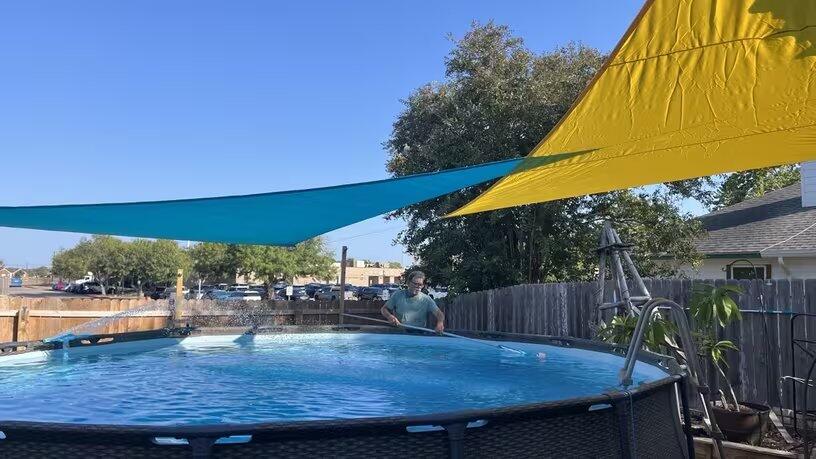
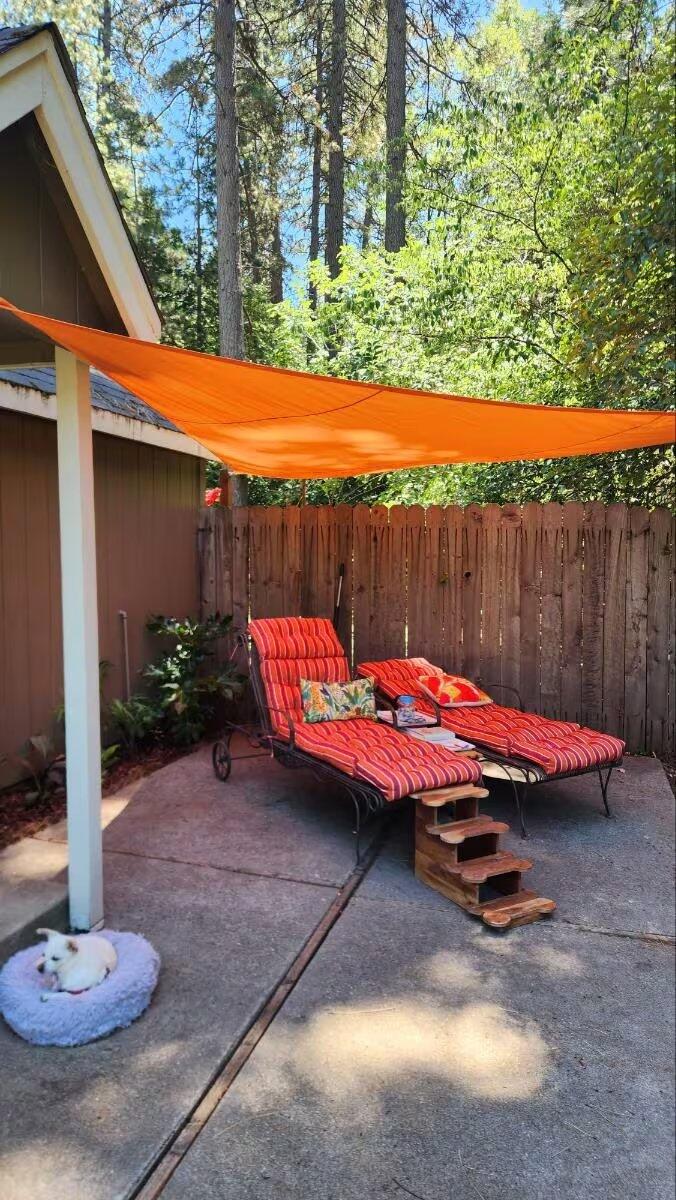
Quick answer: Choose a breathable shade sail if your main goal is cool shade, because hot air and light rain pass through the fabric. Choose a waterproof shade sail if you want to keep a seating or dining area dry, and install it with a steep slope so rain runs off.
Both types block about 95% of UV, so the choice comes down to heat, rain and wind. Here is how our breathable 200 GSM HDPE sails compare with our 220 GSM PU-coated waterproof sails.
Breathable vs waterproof at a glance
| Breathable (Standard) | Waterproof | |
|---|---|---|
| Fabric | 200 GSM knitted HDPE | 220 GSM polyester with PU coating |
| UV block | 95% | 95% |
| Rain | Lets rain through | Sheds rain |
| Heat under the sail | Cooler, hot air escapes | Warmer, air cannot pass |
| Wind | Wind passes through the knit | Catches more wind; not for high-wind sites |
| Slope needed | Optional | Required: 20–40° |
| Warranty | 3 years | 3 years |

Breathable shade sails: cooler shade

A breathable sail is knitted from HDPE. The open knit blocks about 95% of UV but lets hot air rise through the fabric, so the space underneath stays cooler. Rain passes through too, which means water never pools on top and the sail puts less load on your posts in a storm.
Best for: patios, decks, gardens, play areas, pools and any spot where heat is the main problem.
Waterproof shade sails: stay dry

Our waterproof sail uses 220 GSM polyester with a PU coating. It keeps rain off your outdoor furniture as well as blocking about 95% of UV. Because the fabric is sealed, it must be installed at a 20–40° slope so water runs off instead of pooling. Water pooling on a flat sail can stretch the fabric and overload the hardware.
The sealed fabric also traps a little more heat and catches more wind, so we do not recommend waterproof sails for high-wind locations.
Best for: outdoor dining and lounge areas, hot tubs, pergolas and sheltered patios where staying dry matters most.
How to decide
- Do you need to stay dry? Yes: waterproof. No: breathable.
- Is the site windy or exposed? Yes: breathable, or a heavy-duty 260 GSM sail for large spans.
- Can you create a steep slope? If not, choose breathable. A waterproof sail needs one corner much lower than the others.
- Is heat the main problem? Breathable feels cooler.
Installing a waterproof sail

- Set one or two corners clearly lower so water has a path off the sail. See how to angle a shade sail.
- Keep the sail tight. A slack sail forms pockets where water collects.
- Use stainless steel cables or turnbuckles at every corner, never nylon rope. Our 304 stainless steel hardware kits include what you need.
- Leave 0.5 to 1.5 ft between each corner and its anchor for hardware.
Shop standard sizes: our rectangle sun shade sails (8x10 to 16x20 ft) and square sun shade sails (10x10 to 26x26 ft) are breathable 200 GSM HDPE with 95% UV block and ship in 1–3 days.
Frequently asked questions
Is a breathable shade sail waterproof?
No. Breathable sails let light rain pass through. They give shade in light drizzle but will not keep you dry.
Which is cooler, waterproof or breathable?
Breathable. Hot air escapes through the knit, so the space underneath feels cooler than under a sealed waterproof sail.
Can a waterproof shade sail be installed flat?
No. A flat waterproof sail collects water. Install it at a 20–40° slope so rain runs off.
Do you make waterproof sails in custom sizes?
Yes. Our custom waterproof shade sail is made to order in California in 1–3 business days and ships within 3–7 business days.
Still deciding? Order free fabric samples, or call us at 888-777-2538.