Quick answer: Most shade sails fail at the corners and edges, not in the middle. Sails with plain grommets or webbing loops put all the pulling force on the fabric. A Super Ring sail has a steel cable sewn into every edge, connected to stainless rings at each corner, so the tension is carried by the cable instead of the fabric. For large sails, windy yards and sails you want to leave up year round, choose a cable-edged design.
When you tension a shade sail, every corner is pulled toward its mounting point with real force, and wind adds more. Where that force goes decides how long the sail lasts. Here are the three common corner designs and what each is good for.
The three corner designs
| Design | How the force is carried | Good for | Weak point |
|---|---|---|---|
| Grommet corners | A metal grommet punched into the fabric or a reinforced patch | Small, low-cost sails used for a season | Fabric can tear around the grommet under high tension or wind |
| D-ring with webbing | A D-ring held by a webbing strap stitched to the fabric | Most residential sails up to about 16 ft per side | Stitching and fabric at the corner take the load |
| Super Ring (cable edge) | A steel cable runs through every edge pocket and connects to stainless rings at the corners | Large sails, windy sites, carports, sails left up year round | Slightly higher price; needs proper hardware |
Why a cable edge lasts longer
On a webbing or grommet sail, tightening the turnbuckle stretches the fabric itself. Over a few seasons of sun and wind, the fabric near the corners creeps, the edges loosen and the sail starts to flap, which wears it out faster. On a Super Ring shade sail, the edge cable takes the tension from corner to corner. The fabric only has to hold its own shape, so the edges stay tight and the corners do not tear.
The curved (catenary) edges matter too: they let the sail pull flat across the middle without sagging, which also helps it shed wind.
Fabric still matters
A strong corner will not save a weak fabric. Super Ring sails use 260 GSM virgin HDPE with UV stabilizer, which blocks up to 98% of UV and lets rain and air pass through, so water does not pool and wind load is lower than on a solid tarp. For a full comparison of fabric weights, see 200, 220 or 260 GSM?
Hardware: match it to the sail
- Every corner needs its own connection to a solid mounting point: a turnbuckle, a cable, or a ratchet winch. Never use nylon rope; it stretches and breaks down in the sun.
- Leave 0.5 to 1.5 ft between each sail corner and its mounting point so you have room to tension it.
- Use 304 stainless steel hardware outdoors so it does not rust or stain the sail.
- For big sails, a ratchet winch lets you tighten with a wrench instead of turning turnbuckles by hand.
The easiest way to get it right is to buy the sail and hardware together. Our rectangle, square and triangle Super Ring sails with hardware let you choose a 10" kit, a kit plus cables, cables only, or a ratchet winch kit, and save 10% compared with buying them separately. Not sure which you need? See the Shade Sail Hardware Guide.
Which design should you buy?
- Small sail over a play area, one season: a basic D-ring sail is fine.
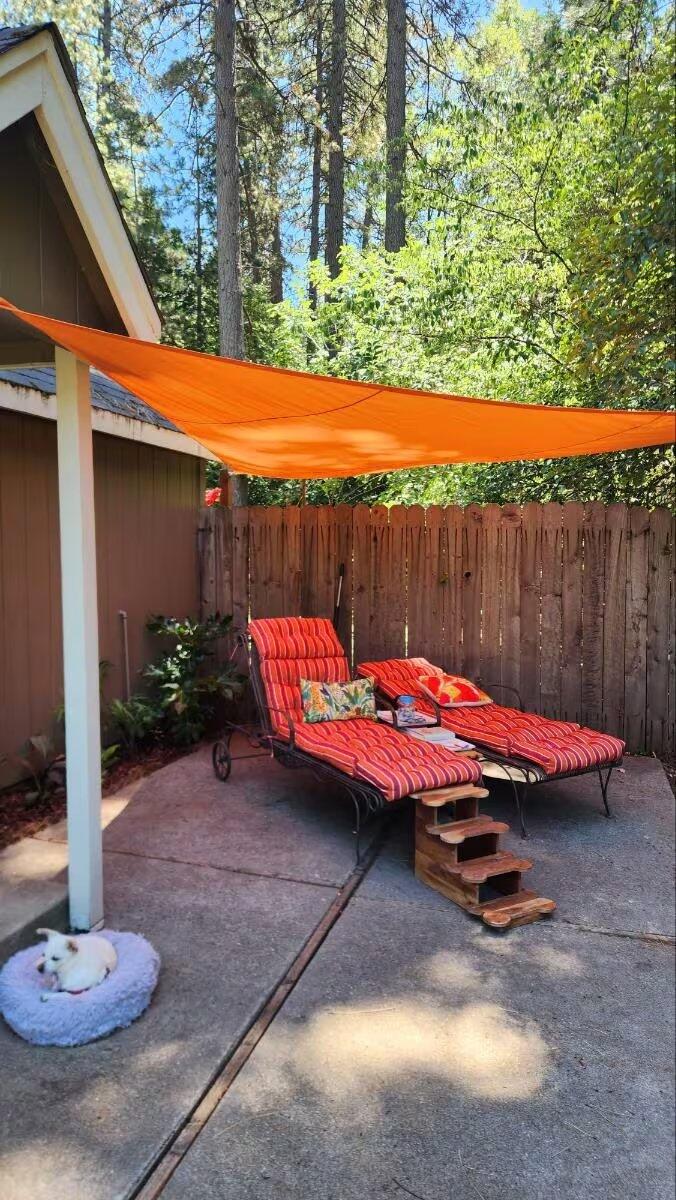
- Patio or deck sail you want to last several years: a heavy duty 260 GSM sail; choose Super Ring if it is over about 16 ft on any side.
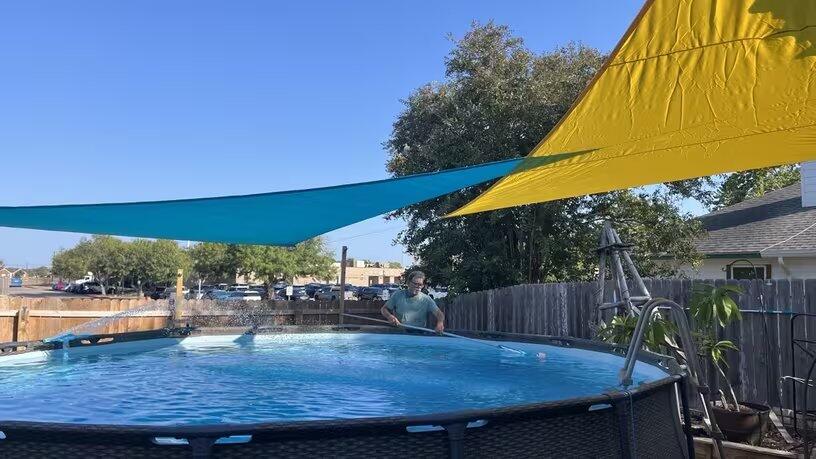
- Driveway, carport, pool or a windy, open yard: Super Ring with a heavy-duty hardware kit. Read Shade Sails in Wind and Shade Sail for a Driveway or Carport before you order.
Shop Super Ring shade sails
- Super Ring rectangle, square and triangle sails, 5 colors, 5-year warranty
- Super Ring sails with hardware: everything in one order
- Custom Super Ring shade sail: made to your exact measurements
Shop standard sizes: our rectangle sun shade sails (8x10 to 16x20 ft) and square sun shade sails (10x10 to 26x26 ft) are breathable 200 GSM HDPE with 95% UV block and ship in 1–3 days.