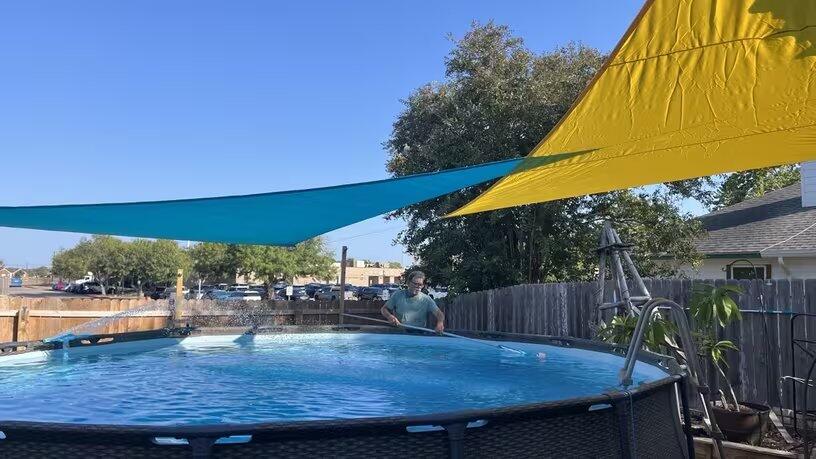
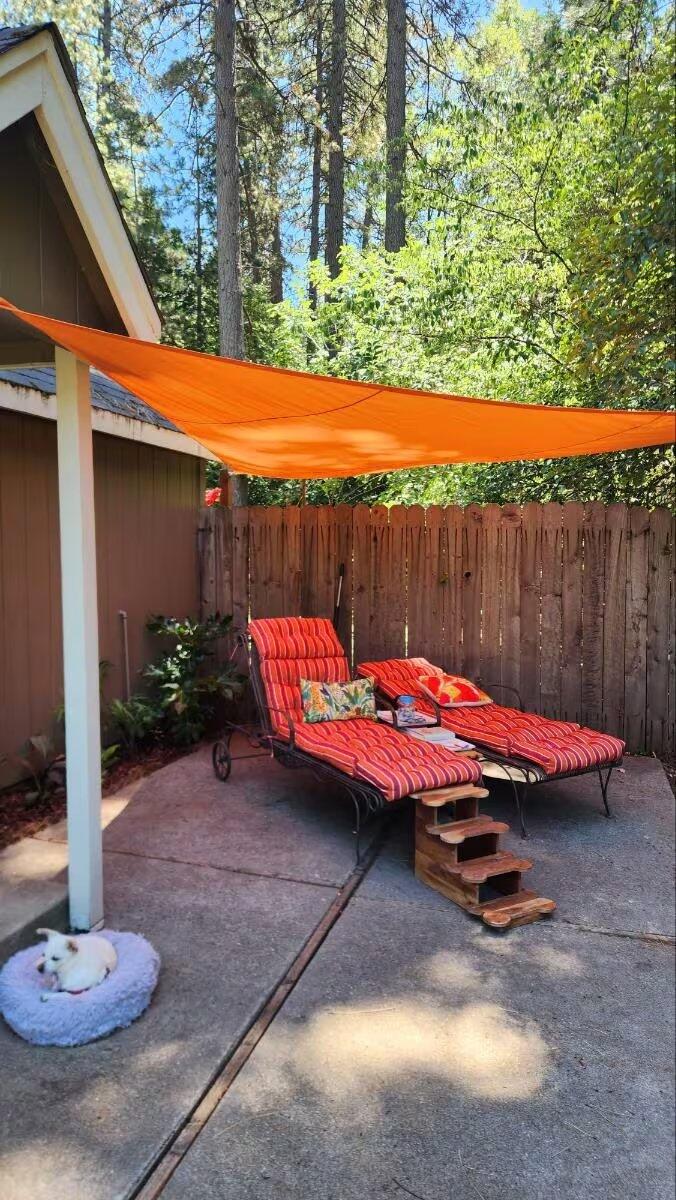
Quick answer: Yes, shade sails work in windy areas if you get four things right: a breathable fabric that lets wind pass through, a heavy duty sail with steel cable edges such as our 260 GSM Super Ring, anchors and stainless steel hardware strong enough for the load, and drum-tight tension so the sail cannot flap. Take any sail down before a storm or very high winds.
Most shade sail failures in wind are not the fabric tearing in the middle. They start at a weak point: a grommet pulling out, a corner seam giving way, a turnbuckle opening, or an anchor screwed into a gutter or thin fence post. This guide shows how to avoid each one.

1. Choose breathable fabric for windy sites
A breathable knitted HDPE sail lets air pass through the fabric, so less force builds up on the sail and the hardware. A waterproof sail is solid: wind cannot pass through it, so it catches more load, much like a boat sail. If your yard is windy and you do not need rain cover, a breathable sail is the safer choice. If you do need rain cover, install the waterproof sail with a strong slope and extra-solid anchors. See waterproof vs breathable shade sails.
2. Choose a heavy duty sail with steel cable edges
On a standard sail, the pulling force at each corner goes into the fabric and webbing. On our Super Ring sails, a stainless steel cable runs through the hem from corner to corner and locks into a stainless steel corner ring, so the cable carries the pulling force instead of the fabric. There is no grommet to tear out, and the edges stay straight and tight.
| Standard sail | Super Ring heavy duty | |
|---|---|---|
| Fabric | 200 GSM knitted HDPE | 260 GSM virgin HDPE |
| UV block | 95% | Up to 98% |
| Edges | Heavy-duty webbing, stainless D-rings | Steel cable in every edge, stainless Super Ring corners |
| Best for | Patios, decks, gardens in normal conditions | Large spans, pools, driveways, windy sites |
| Warranty | 3 years | 5 years |
For a deeper comparison of fabric weights, read 200, 220 or 260 GSM?
3. Use anchors that can take the load

- Good anchors: solid masonry or brick walls, structural wood framing (not fascia boards alone), mature trees with thick trunks, and steel poles set in concrete footings.
- Bad anchors: gutters, downspouts, vinyl or thin wood fence posts, and light deck railings.
- Poles: if you need a pole, use a steel shade sail pole set deep in concrete and angled slightly away from the sail. See our shade sail poles guide.
4. Use stainless steel hardware, never rope
Connect every corner with a stainless steel turnbuckle or cable. Do not use nylon rope or bungee cords: they stretch, which lets the sail flap, and flapping is what wears out corners. Use the 6" hardware kit for sails up to about 16 ft per side and the 10" heavy duty kit for larger sails. Leave 0.5 to 1.5 ft between each sail corner and its anchor so the turnbuckle has room to tension. More in our hardware guide.
5. Tension it drum-tight and add a twist
A loose sail flaps, and flapping is the fastest way to damage fabric and hardware. Tighten the turnbuckles until the fabric is drum-tight with no wrinkles. On a four-corner sail, set two opposite corners higher than the other two. This "hyperbolic twist" makes the fabric much stiffer in wind, sheds rain and looks better. See how to angle a shade sail. Re-check tension after the first few days and at the start of each season.
6. Take it down before storms
No shade sail is designed to stay up in a storm. Unclip the sail before forecast storms, hurricanes or very high winds, and over winter if you get heavy snow. With turnbuckles and snap hooks, taking a sail down takes a few minutes. Our warranty covers defects in material or workmanship; damage from high winds or storms is not covered, so taking the sail down protects both the sail and your anchors.
Windy-site checklist
- Breathable fabric, unless you truly need rain cover.
- Heavy duty 260 GSM sail with steel cable edges for large or exposed spans.
- Solid walls, structural framing, big trees or steel poles in concrete.
- Stainless steel turnbuckles at every corner, no rope.
- Drum-tight tension with a twist, re-checked each season.
- Take it down before storms.
FAQ
What is the best shade sail for windy areas?
A breathable, heavy duty sail with steel cable edges, such as our 260 GSM Super Ring, installed drum-tight on strong anchors with stainless steel hardware.
Should I take my shade sail down in wind?
A properly tensioned sail can stay up in normal breezy weather. Take it down before storms, hurricanes or very high winds, and over winter if you get heavy snow.
Why does my shade sail flap?
It is not tight enough, or it is connected with rope or bungees that stretch. Replace them with stainless steel turnbuckles, tighten until the fabric is drum-tight, and add a twist by raising two opposite corners.
Is a waterproof shade sail OK in wind?
It can be, but it catches more wind than a breathable sail because air cannot pass through. Use very solid anchors, a strong slope and take it down before high winds. In very windy yards, choose breathable.