Quick answer: Choose a patio umbrella if you only need to shade one table and want something you can move. Choose a shade sail if you want to shade a whole patio, pool or driveway at a low cost and have walls, posts or room for poles to anchor it. Choose a pergola if you want a permanent architectural structure and have the budget for a build project.
All three create shade, but they solve different problems. This guide compares them on coverage, installation, wind, rain, looks and cost so you can pick the right one for your yard.

Patio umbrella: quick shade for one spot
An umbrella is the simplest option: no installation, easy to move, and inexpensive. The trade-off is coverage. A typical market umbrella shades a single table, and the shade moves as the sun moves, so you end up tilting or relocating it through the day. Umbrellas also have to be closed in wind; an open umbrella catches gusts like a sail without any tension holding it, which is why they tip over or flip inside out.
Best for: a small balcony, one dining table, renters, or anyone who wants shade with zero installation.
Shade sail: large shade on a budget

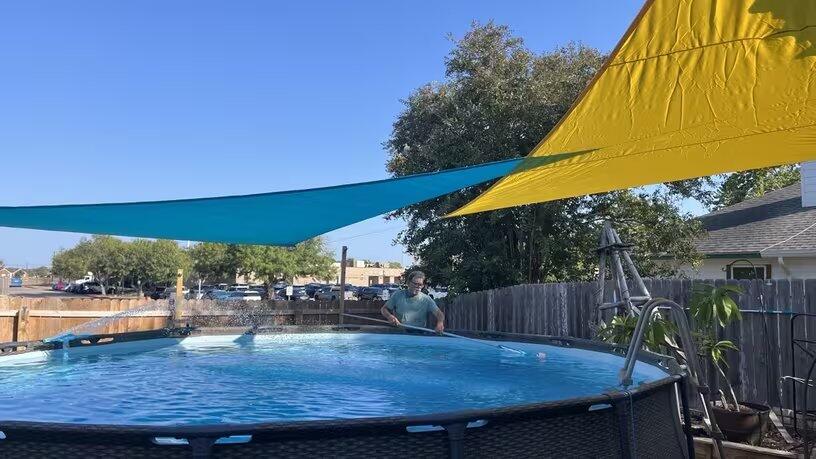
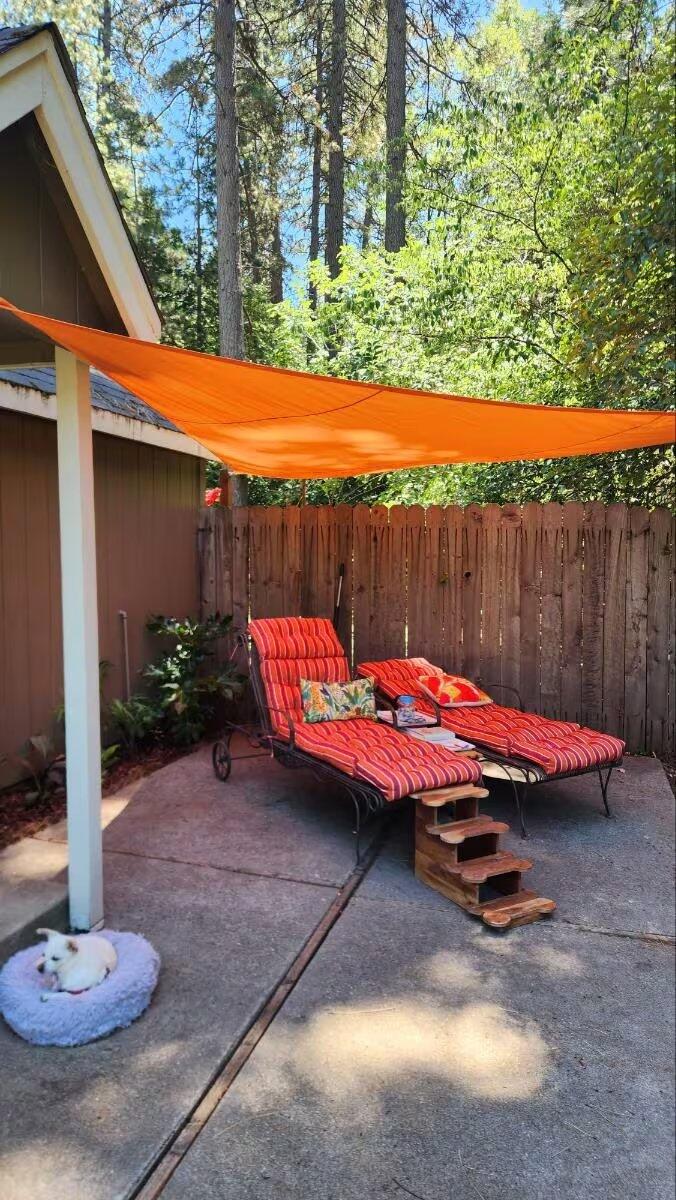
A shade sail is a piece of shade fabric stretched tight between three or four anchor points: a house wall, sturdy posts, trees or dedicated shade sail poles. Because it is held under tension at every corner, a properly installed sail stays up in breezy weather instead of flapping or blowing away, and one sail can cover a whole patio, play area, pool or car.
- Coverage: our stock sails run from small triangles to 16' x 20' rectangles, and we make custom sizes for larger spaces.
- Sun: our breathable sails block 95% of UV (98% for Super Ring), and our 200 GSM sail lowers the temperature underneath by about 10 to 15°F.
- Rain: breathable sails let rain and hot air pass through; waterproof sails shed rain if you slope them. See waterproof vs breathable.
- Installation: most square or rectangle sails take an afternoon with two people. You need a stainless steel hardware kit and solid anchor points.
Best for: shading a large area for a fraction of the cost of a permanent structure, especially over pools, patios, sandboxes and driveways.
Pergola: a permanent outdoor room
A pergola is a freestanding or attached frame of posts and beams. It defines an outdoor room and can support lights, fans, vines or curtains. On its own, the open roof gives only partial shade, so most people add a canopy or pergola cover. Pergolas are the most solid of the three in wind, but they are also the most expensive and usually involve footings, permits in some areas, and a weekend or more of building or a contractor.
Best for: homeowners who want a permanent, architectural feature and are ready for a bigger project.
Which one should you choose?
| If you want... | Choose |
|---|---|
| Shade for one table, no installation | Patio umbrella |
| Shade over a whole patio, pool or play area for less | Shade sail |
| Shade that also keeps off rain | Waterproof shade sail, or a pergola with a waterproof cover |
| Shade over a car or driveway | Heavy duty shade sail on steel poles |
| A permanent structure for lights, fans and plants | Pergola |
Many yards combine them: a sail over the play area, an umbrella at the bistro table, or a pergola with a replacement shade cover on top.
What does a shade sail setup cost?
A shade sail project has three parts. At ShadeMart, standard breathable rectangle sails start around $25, and our Super Ring heavy duty rectangle sails run about $85 to $255 depending on size. Stainless steel hardware kits are about $16 to $40. If you have no wall or post to anchor to, our steel shade sail poles cost $273 (8 ft) and $377 (12 ft) each. Prices change, so check each product page for the current price.
Shop standard sizes: our rectangle sun shade sails (8x10 to 16x20 ft) and square sun shade sails (10x10 to 26x26 ft) are breathable 200 GSM HDPE with 95% UV block and ship in 1–3 days.
FAQ
Is a shade sail better than an umbrella?
For large areas, yes. A tensioned sail covers far more space than an umbrella, stays up in breezy weather and does not need to be moved as the sun moves. An umbrella is better when you need portable shade for a single spot or cannot install anchors.
Is a shade sail cheaper than a pergola?
Usually much cheaper. A sail and hardware cost a fraction of a pergola, and installation takes an afternoon rather than a building project. A pergola is the better choice only if you want a permanent structure.
Do shade sails work in the wind?
Yes, when they are tensioned drum-tight on strong anchors with stainless steel hardware. Breathable sails let wind pass through, which reduces the load. Take any sail down before a storm or very high winds. Read more in our guide to shade sails for windy areas.
Can a shade sail keep rain off?
Only a waterproof sail. Install it at a slope so water runs off. Breathable sails block sun, not rain.
Related guides: shade canopy for patio: sail vs pergola cover vs pop-up · replacement pergola cover guide